Pages

Showing posts with label Research. Show all posts

Sunday, 16 June 2019

(Task 3) Chicago and Sweet Charity Costume (Context and Research)

Chicago:

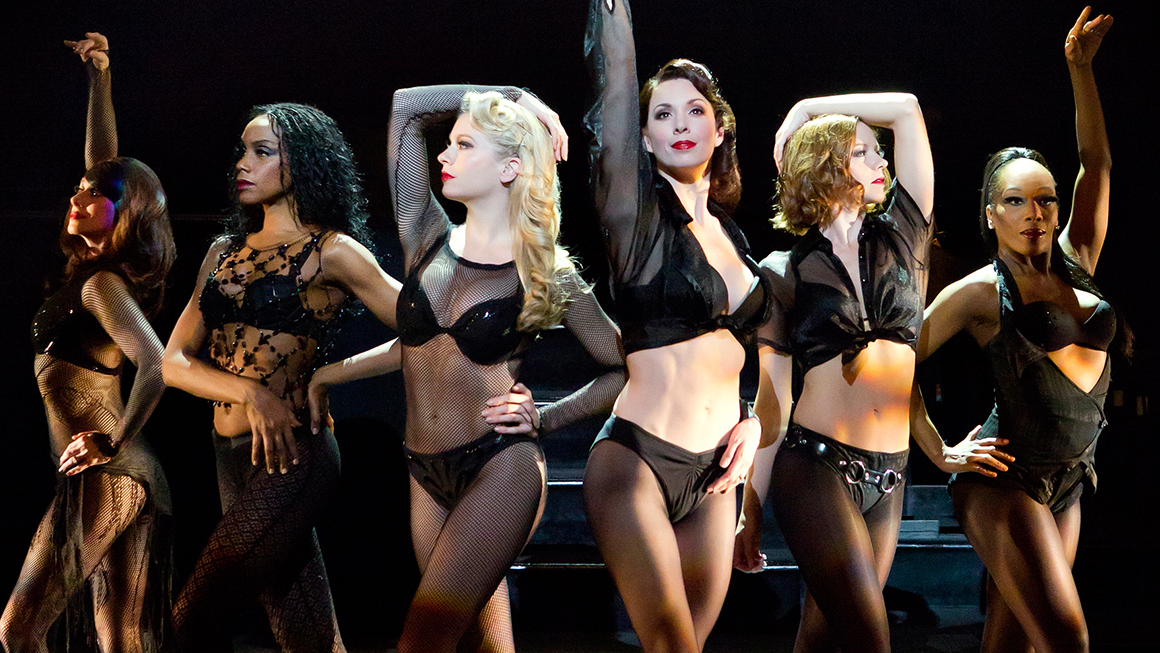
"Chicago" is set in the 1920's and there were many changes within society and historical values. During this period, it was the First World War meaning boys at a certain age and men would go fight, leaving the women. This empowered women to gain power and dominate society against the laws. It was the beginning of a new opportunity as females would break the boundaries wearing "mini skirts" which were above the ankles however below the knees. As much as they were trying to normalise this style, it had a deeper and seductive meaning as many females would gain power by these type of clothings and use sex as well.

There were many other clothings as women wore flapper dresses, cloche hats, stockings, tassels, the use of feathers to woo any man. It was very scandalous as there was a majority of adultery going around and crime controlling everywhere, especially in Chicago. This allowed females to grow independence and courage that they can change things for themselves. Fashion and style was (is still) hard to impress as it was primal to be flat chested and backed to make them more attractive, they would go through the effort of wrapping themselves to fit in.

The original designer for "Chicago" was named Patricia Zipprodt. She was known for her technique of painting fabrics and having deep knowledge of the subject she would be working on. She worked along Fosse's work as she blossomed all the costumes and outfits we are known for today. Zipprodt explored her research into the 1920's and interpret the idea of making the costume more revealing and seductive, to encourage the dirtiness within the musical.

https://en.wikipedia.org/wiki/Patricia_Zipprodt
https://www.nytimes.com/1999/07/19/arts/patricia-zipprodt-74-costume-designer.html
http://www.american-historama.org/1913-1928-ww1-prohibition-era/1920s-fashion.htm
Image result for 1920s fashion
Related image


Image result for 1920s fashionRelated image

Sweet Charity:


Sweet Charity is based in the life of the 60's and many changes were made socially and historically. This was the era where there was a greatness of diversity within fashion. This was the decade where traditions were broken and fashion was directed towards the youth market.

There were two styles within society within this period; the trendy and the hippie style. They wore tie dyed shirts, long hair and beards, big, long bell-feet trousers named "Capri", with headbands. This was the era of hippies and the opening of a new social climb. It was seen as another religious element as they would believe in peace and humanity. Another style would conjure a section where

As well as "Chicago", Patricia Zipprodt had done costumes for this musical and really emphasised the different styles they had within this time; the contrast of Charity's clothing and her Fandago Ballroom friends towards Daddy Brubeck highlights the different movements people were facing and the difference in society that others looked down or found odd.

Image result for 1960's fashionRelated image


https://www.retrowaste.com/1960s/fashion-in-the-1960s/
https://www.buffalorising.com/2011/10/the-fashion-that-was-the-sixties-and-how-it-influenced-the-fashion-world/ (October 21, 2011, 5:37 pm)

Friday, 14 June 2019

(Task 3) Chicago (Context and Research)


CHICAGO

Chicago was originally written by a journalist, Maurine Dallas Watkins and was adapted as a musical, by the lyricist, Fred Ebb and director/choreographer, Bob Fosse; and composed by John Kander. Kander and Ebb were highly successful songwriters who created amazing musicals together with a lot of influential artists. They met in 1964 and has been a duo for more than 40 years; they first collab was two musicals called “My Colouring Book” and “I Don’t Care Much”. Their style of work surrounded the idea of society and thedark side of how the 1920’s lifestyle was. Fosse shared the same intentions of the dark and uncomfortable side of things and wanted make the audience feel disturbed. I believe this is the reason they worked so well together and created Chicago as it was.

The show was based in the jazz-age period (1920-1930’s) where society was very abundant to crime and stripper bars as there wasn’t as much freedom to do certain stuff. Majority of the parts within the musical were surrounded by this style and rapidly grew larger in the music industry. Different sings like "Cell Block Tango"and "All That Jazz", has the similar piano structure with the chords and syncopation which are both an element of Jazz music.

The play/musical is based on two real females murder, Beulah May Annun and Belva Gaertner, cases in the 1920’s as they’re both represented as two characters “Roxie Hart” and “Velma Kelly” with similar backgrounds. This was a time where the media would fantasise over homicides committed by females, whom kills their husbands or lovers; it was a growing number alongside the gang ratings. These two stories stood out as both female murderers had a long list of love interest.

The theme of theatrical and the musical term would circle around murder and the jazz style as in the play, the main contextual theme would be about the murders and the court cases and speech whereas the music would be all surrounded by jazz and expression through dance and raw understanding of it.

During this era, there were many illegal business’s running like stripper bars, gambling, joints and the hunger of fame everywhere. The biggest social issue were the gangster era as it as was making Chicago a dangerous place which included, bank robberies, kidnapping and drug trafficking. There was no control within the government as gang leaders would pay off politicians and police officers. The major situation that took a storm within the 1920’s was the prohibition of alcohol as this lasted for 13 years straight. This allowed thegrowth of gangs and secret bar places, disguised as normal retail shops; these were called “Speak easy” as the idea of alcohol would let you speak so freely of everything. This was seen as a very dirty temptation to get lost in and was seen as very sexy. The birth of cocktails were created to get rid of the nasty taste that people were putting to make alcohol; they would use fruits, vegetables, any alcohol they can get their hands on and to create any kind of intoxicating beverages.

Fosse had made a massive impact in the musical of Chicago he was one of the director/choreographer for it. In many parts of the musical, Fosse’s influence of jazz hands, rolled shoulders, turned in knees in a stationary positions, hip rolls and small movements. These inputs make dance routines and the whole musical stand out as it carries a sexualised and dark contextual theme. At the same time, Fosse was going through numerous issues with his marriage, his career and his medical conditions. He was under a lot of stress as his marriage had fell apart with his wife and Muse, Gwen Verdon as he had his infidelity with his mistress, Ann Reinking. He also had a cardio attack during this time as he would continuously drink and smoke nonstop. Chicago was suppose to be an apology to his wife for his infidelities andthe pressures of jealousy and poor treatment, he dragged Gwen through.

http://www.newlinetheatre.com/chicagochapter.html
(Miller. S: 7th May 2019): "Inside Chicago" from New line Theatre

https://www.google.com/amp/s/www.vanityfair.com/hollywood/2019/05/bob-fosse-girlfriend-ann-reinking-gwen-verdon/amp

https://m.ranker.com/list/bob-fosse-gwen-verdon-true-story/ryan-sargent


Friday, 24 May 2019

(Task 3) Sweet Charity (Research and Context)


Sweet Charity

Sweet Charity is originally based on an Italian screenplay “Night of Cabiria” where it shows the journey of an ever-hopeful prostitute struggling with the in and out of romance (This was by Federico Fellini). In the musical, directed and choreographed by Bob Fosse, it follows the same story line about a woman named Charity Hope Valentine who wants to be loved as she goes through a series of men, who she hopes would love her, in New York City. Her motive throughout the whole show is “Without love, life has no purpose”. The music was created by Cy Coleman and lyrics by Dorothy Fields. The show starred Bob Fosse’s talented wife and muse, Gwen Verdon which was in theatre’s on January 29, 1966; the movie version was released in 1969. Originally, the show was meant to be a two-one act; there was another adaption from Fellini’s piece written by Elaine May, where Verdon would play as a cat burglar who robbed apartments by wearing suction cups on her hands and feet.

In the 60’s, many social issues were happening whereas there were many issues commemorated such as the “Swinging Sixties”, "Civil right movements", racism and sexism took place. It was the era where Martin Luther King Jr was making changes and encouraging multicultural figures within society. Sweet Charity focus on the politic sides of things as their were many movements within feminism and the women rights/liberation. It was a diverse social movement in the United States for women to plea freedom and equality within life. This was the time within the 60's and 70's as it was seen as the "Second wave". Sweet Charity has a wide range of themes that influence the 60's such as the song "Rhythm of Life" portrays the 'Hippie era' as it was one of the social lives within the 60's. It originated on college campuses within the US however branched out to Britain and Canada. It wasn't involved with political engagements as it was opposed to be known as "Yippies" (Youth International Party). Many people who followed this activist counterpart who feel alienated from middle class society due to their materialism and repression while developing their own distinctive lifestyle. Thy supported piece and had a phrase "Make love, not war" making them the flower children.

In comparison to “Chicago”, “Sweet Charity” has similar characteristics when it comes to the raw seductive setting, most characters are projecting throughout. It showed many women empowerment and themes of what New York City was experiencing through society. Both musicals has the same melodic interest however, "Chicago" is more inside, dark jazz instrumental whereas "Sweet Charity" has the same theme but it's more bright and easy to dance along to. You can tell by listening to the music that within both musicals the story line is very distinctive and easy to understand. As both musicals are within the different era, it's clear that society has evolved and situations has been influence. For example; in "Big Spender", the atmosphere was more free and almost everythiung about it was legal however in "All that Jazz", The setting is more sinister and a crave of temptation which was forbidden. 


https://www.britannica.com/topic/hippie (Editor of Encyclopaedia Britannica - Article - 11th April 2019)

https://www.britannica.com/topic/womens-movement (Elinor Burkett - Article - 22nd May 2019)

https://theatrenerds.com/10-things-you-might-not-know-about-sweet-charity/ (Marc Bonanni - 10 things you might not know about "Sweet Charity" - 3 years ago)