Pages

Sunday, 16 June 2019

(Task 3) Chicago and Sweet Charity Costume (Context and Research)

Chicago:

"Chicago" is set in the 1920's and there were many changes within society and historical values. During this period, it was the First World War meaning boys at a certain age and men would go fight, leaving the women. This empowered women to gain power and dominate society against the laws. It was the beginning of a new opportunity as females would break the boundaries wearing "mini skirts" which were above the ankles however below the knees. As much as they were trying to normalise this style, it had a deeper and seductive meaning as many females would gain power by these type of clothings and use sex as well.

There were many other clothings as women wore flapper dresses, cloche hats, stockings, tassels, the use of feathers to woo any man. It was very scandalous as there was a majority of adultery going around and crime controlling everywhere, especially in Chicago. This allowed females to grow independence and courage that they can change things for themselves. Fashion and style was (is still) hard to impress as it was primal to be flat chested and backed to make them more attractive, they would go through the effort of wrapping themselves to fit in.

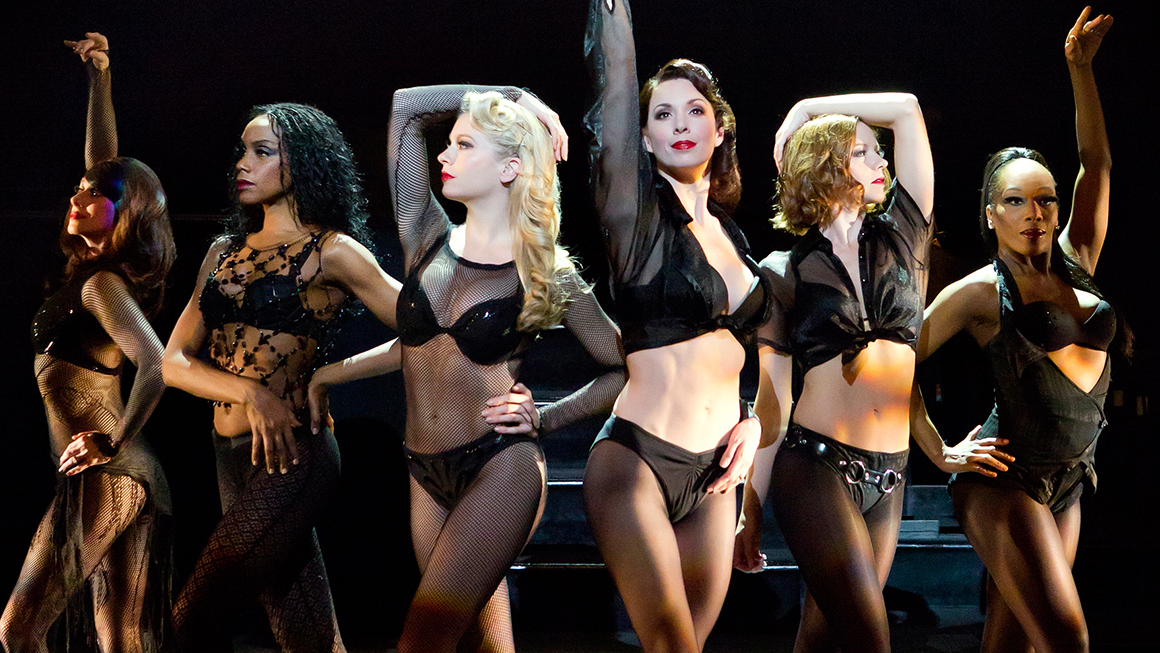
The original designer for "Chicago" was named Patricia Zipprodt. She was known for her technique of painting fabrics and having deep knowledge of the subject she would be working on. She worked along Fosse's work as she blossomed all the costumes and outfits we are known for today. Zipprodt explored her research into the 1920's and interpret the idea of making the costume more revealing and seductive, to encourage the dirtiness within the musical.

https://en.wikipedia.org/wiki/Patricia_Zipprodt
https://www.nytimes.com/1999/07/19/arts/patricia-zipprodt-74-costume-designer.html
http://www.american-historama.org/1913-1928-ww1-prohibition-era/1920s-fashion.htm
Image result for 1920s fashion
Related image


Image result for 1920s fashionRelated image

Sweet Charity:


Sweet Charity is based in the life of the 60's and many changes were made socially and historically. This was the era where there was a greatness of diversity within fashion. This was the decade where traditions were broken and fashion was directed towards the youth market.

There were two styles within society within this period; the trendy and the hippie style. They wore tie dyed shirts, long hair and beards, big, long bell-feet trousers named "Capri", with headbands. This was the era of hippies and the opening of a new social climb. It was seen as another religious element as they would believe in peace and humanity. Another style would conjure a section where

As well as "Chicago", Patricia Zipprodt had done costumes for this musical and really emphasised the different styles they had within this time; the contrast of Charity's clothing and her Fandago Ballroom friends towards Daddy Brubeck highlights the different movements people were facing and the difference in society that others looked down or found odd.

Image result for 1960's fashionRelated image


https://www.retrowaste.com/1960s/fashion-in-the-1960s/
https://www.buffalorising.com/2011/10/the-fashion-that-was-the-sixties-and-how-it-influenced-the-fashion-world/ (October 21, 2011, 5:37 pm)

Friday, 14 June 2019

(Task 5/6) Fosse Performance- 06/06/19 (Evaluation)

Tech Rehearsal:

I believe that the tech rehearsal went better than expected. Everyone was responding well and understood where they needed to improve on. I needed to improve on my solo more and engage with the audience within it.

Everyone had important roles to conduct and understood where they needed to be. One important thing we would all have to do was keep costume in place as it's vital that everything must be where it must.


Actual Performance:

As an individual, I believe the show went really really well and I contributed my effort within it like others. I would point out that I persevered throughout when I was making many mistakes and encouraged others to carry on no matter what. This would link in with everyone working as an ensemble; we were able to gain working as a team and supporting each other if we would get nervous or make a mistake.

My strength as an individual would be that I persevered throughout the entire show and I committed to my sections strongly. Within rehearsals, I believe I kept pushing and trying to find new ways to improve each thing I did. For example, if my footwork wasn't in time with the music or everyone else, how will I change it, what would I need to do to follow everyone in sync. I would always question myself and repetitively go over a section within a routine or a harmony line in a song until I feel comfortable with myself doing it. I would point out that within the entire show, I believe in majority of the sections, I did really well to sustain my role and brought my attitude of growth to the stage. Another example would be, when I had done a transition from "Something Better than This" into "If They Could See Me Now" I really pushed vocally to project and bring a lot of stage presences to interact with the audience; I also sustain the dance routine for this transition. In the rehearsal process, I did struggle with this transition as I would be out of breath as I would devote more effort into making the dance perfect that the vocal would be lost, however I had to find a balance between the both and take deeper breaths. As an ensemble, I believe we worked great as a whole as everyone would support each other, we would know what we would be doing and many would improvise if something didn't go right. I would say as everyone has a passion to do this course, it was easy for everyone to be on the same page and put the same effort in. I believe that we move as a collective; example would be with "Cell Block Tango" for the Chicago medley, we were in sync with everything and we moved as one unit. Personally, I would say that "Cell Block Tango" was our strongest sections out of the entire show as everyone knew what they were doing and it worked really well. A section were everyone was strong at was when we began to sing "The dirty bum" and stagger onstage, we was on time with each other and knew where to go and how to make it strong and powerful.

I would say my weakness within this process would be, getting into character and projecting with "All That Jazz". During the rehearsal process, I did struggle with getting into my character more and exploring the dark side of the character and her intentions. As Velma has just killed her husband and her sister, I could've explored that more and explored the song more. As the song is quite gritty and low for my vocal range, I did find it hard to project and be seductive at the same time. I was getting feedback on my vocal for this song especially as I needed to push and come out of my comfort zone however I wasn't sure how to project such a low song. I did ran out of breath towards the last section of the second verse as I was holding my breath the entire verse when I began belting out. I would say I did try to improvise around it however I did let myself down with this solo. I would point out that as an ensemble we wasn’t strong within the rehearsal process as most of the time there was a lot of tension and personality clashes. It was only towards the end of the project when we tried to pull through and worked as a unit. I believe that as an ensemble and responding to each other we are quite aggressive or we wouldn't take criticism well. Others would have a lot to say about others mistake or would focus on other people instead of themselves which I thought was something many struggle with.

My contribution weren't as massive however they had massive impacts when it came towards the end result. I took on the role of sections like "All That Jazz" in the Chicago medley, "Something Better than This" and "If They Could See Me Now" in the Sweet Charity medley. My energy had brought a great amount of stage presence as I would get a positive reactions from the audience. Another contribution I made was, with my peer, who took lead with "Magic To Do" from "Pippin", I helped her with her stage presence and how to use her prop to engage with the audience as well as how her vocal could sustain. I would say she took my help as she had presented herself onstage and really got a great reaction from the audience.

I would say my experience with Fosse has opened up my knowledge of the industry and the struggles of a performer. I learned that it's a lot of work and effort as even the little details matter.


(Task 3) Chicago (Context and Research)


CHICAGO

Chicago was originally written by a journalist, Maurine Dallas Watkins and was adapted as a musical, by the lyricist, Fred Ebb and director/choreographer, Bob Fosse; and composed by John Kander. Kander and Ebb were highly successful songwriters who created amazing musicals together with a lot of influential artists. They met in 1964 and has been a duo for more than 40 years; they first collab was two musicals called “My Colouring Book” and “I Don’t Care Much”. Their style of work surrounded the idea of society and thedark side of how the 1920’s lifestyle was. Fosse shared the same intentions of the dark and uncomfortable side of things and wanted make the audience feel disturbed. I believe this is the reason they worked so well together and created Chicago as it was.

The show was based in the jazz-age period (1920-1930’s) where society was very abundant to crime and stripper bars as there wasn’t as much freedom to do certain stuff. Majority of the parts within the musical were surrounded by this style and rapidly grew larger in the music industry. Different sings like "Cell Block Tango"and "All That Jazz", has the similar piano structure with the chords and syncopation which are both an element of Jazz music.

The play/musical is based on two real females murder, Beulah May Annun and Belva Gaertner, cases in the 1920’s as they’re both represented as two characters “Roxie Hart” and “Velma Kelly” with similar backgrounds. This was a time where the media would fantasise over homicides committed by females, whom kills their husbands or lovers; it was a growing number alongside the gang ratings. These two stories stood out as both female murderers had a long list of love interest.

The theme of theatrical and the musical term would circle around murder and the jazz style as in the play, the main contextual theme would be about the murders and the court cases and speech whereas the music would be all surrounded by jazz and expression through dance and raw understanding of it.

During this era, there were many illegal business’s running like stripper bars, gambling, joints and the hunger of fame everywhere. The biggest social issue were the gangster era as it as was making Chicago a dangerous place which included, bank robberies, kidnapping and drug trafficking. There was no control within the government as gang leaders would pay off politicians and police officers. The major situation that took a storm within the 1920’s was the prohibition of alcohol as this lasted for 13 years straight. This allowed thegrowth of gangs and secret bar places, disguised as normal retail shops; these were called “Speak easy” as the idea of alcohol would let you speak so freely of everything. This was seen as a very dirty temptation to get lost in and was seen as very sexy. The birth of cocktails were created to get rid of the nasty taste that people were putting to make alcohol; they would use fruits, vegetables, any alcohol they can get their hands on and to create any kind of intoxicating beverages.

Fosse had made a massive impact in the musical of Chicago he was one of the director/choreographer for it. In many parts of the musical, Fosse’s influence of jazz hands, rolled shoulders, turned in knees in a stationary positions, hip rolls and small movements. These inputs make dance routines and the whole musical stand out as it carries a sexualised and dark contextual theme. At the same time, Fosse was going through numerous issues with his marriage, his career and his medical conditions. He was under a lot of stress as his marriage had fell apart with his wife and Muse, Gwen Verdon as he had his infidelity with his mistress, Ann Reinking. He also had a cardio attack during this time as he would continuously drink and smoke nonstop. Chicago was suppose to be an apology to his wife for his infidelities andthe pressures of jealousy and poor treatment, he dragged Gwen through.

http://www.newlinetheatre.com/chicagochapter.html
(Miller. S: 7th May 2019): "Inside Chicago" from New line Theatre

https://www.google.com/amp/s/www.vanityfair.com/hollywood/2019/05/bob-fosse-girlfriend-ann-reinking-gwen-verdon/amp

https://m.ranker.com/list/bob-fosse-gwen-verdon-true-story/ryan-sargent


Wednesday, 12 June 2019

(Task 4) Music- 23/05/19 (Vocal Skills and Reflection)

23/05/19:

We went over the musical "Sweet Charity" and the song "Dancing Man" vocally and physically to work out areas we would be singing as it's dominated for a dancing routine. As we previously had dance and done singing within rehearsals, we didn't need to do any warm ups.

As an individual, I simply understood areas I needed to come in for and what to sing as it was quite easy for me in "Dancing Man", I never struggled with any of the vocal section which was perfect. For my trio and duet in "Sweet Charity", I would say there was areas where I needed to create characteristics in both songs. In "Something Better than This", I would be representing a taxi dancer who wants a better life and explore her dream, so vocally I would have to be almost begging but demanding a change in my life. For my next song, "If my friends could see me", I have to portray an excited girl who has made it into life and has successfully spent a night with a famous actor. The vocal work would be very vibrant and loud and over the top with everything as well as physical movements.

My target for my trio and duet would be to work on the transition as it was very hard for me to catch my breathe after both songs. I would have to work on breathing exercise and take my time with the second song.

24/05/19:

Within this session, we looked over the song "Rhythm of life" as it was the first time going over it and it would be the final song for our "Sweet Charity" medley. We did our normal vocal warm up and diaphragm support. As this song as quite a powerful and vibrant song, the support of doing these warm ups benefits us when trying with harmonies and belting notes.

I struggled with the harmony on the third chorus and I had to go over it about 10 times. I would say this was a hard step for me vocally because I would be alright singing it alone however when other harmonies would get involved as well, I would slip into the other harmonies and lose my note instantly. What myself and my group, who was doing the harmony as well, would have a recording of the piano and pitch where to start each time. On the other hand, it was still a struggle as it was a quick change from head voice into chest voice.


Monday, 10 June 2019

(Task 4) Music- 09/05/19 (Vocal Skills and Reflection)

09/05/19:

This session, we went over "Cell Block Tango" for the first half and worked on "Magic to do" in the last half. We did our normal vocal warm up to release the tension through our bodies and our voice. Lately, I've been struggling with Hay fever as it would put a strain on voice and I wouldn't be able to belt out when I needed to. I believe this was a struggle I would have to overcome within the process personally.

What I believe that went well was how strong as an ensemble we were at singing both songs; as we were just familiarising ourselves with "Cell Block Tango" which was helpful as we would fix areas that needed to be improved, paid attention to detail within harmonies, timing and dynamics.

The improvements I have individually would be for me not to come in with the solo as it's split into two sections, where it's the main character and the ensemble singing as a call and response. I believe to get over this I would have to listen to pre recordings and remember that section so I don't forget. As an ensemble, we are quite strong with the whole song however when it came to both dancing and singing, we would do the routine and forget to sing underneath the speech section. It's understandable as everyone is quite out of breath however to overcome this target, I think we should take deep breaths and almost breathe the words as it's the underscore.

Tuesday, 4 June 2019

(Task 4) Dance- 07/05/19 (Practical Skills and Reflection)

07/05/19:

Within this session, we focused on a number from Bob Fosse's 'Pippin' called "Magic To Do". This was the first time we've heard or seen it and from my perspective, I thought it was a very vibrant song and has a contrast of all of Fosse's other work which is more dark and jazz like. Compared to other musicals Fosse has done, this musical was more open to character being different and creating their own person; Fosse's work normally evolved around everyone being the same, every character has the same traits and same style. This allowed me to understand and take this as a guide to own and create my character onstage.

We did a warm up as per usual and was directed onstage to improvise with the backing track to get an idea of how the melody works and take inspiration from the video we watched. In my opinion, I really liked the set out of this song and how they choreographed everything, the stage was really bright and vibrant which stood out for me. It instantly makes me think that the context and the music is very musical-like and bold.

I simply thought about Fosse's style and added jazz hands and bent in knees with the melody and rhythm of the music. The song holds many values of sass and dominants especially with the ring leader singing it, so I took influence from this and enhanced this into the movement I was portraying. What went well for me would be allowing me to use varieties of my body and finding different movements to choreograph, I liked the freedom I had with exploring that instead of a set choreography and being free among the stage.

I think the areas of improvement for me would be to explore the spacing and the levels with my movement. I was cornered on the right side of the stage a lot, I feel like I should travel more alongside the stage within levels and the dynamics; include more floor work, more acrobatic positions. I feel like my target should include these improvements. In my free time, I will go over moves I can use every time for the song; I should choreograph small sections to fit in with the timing and to allow me to understand variety with my body.


08/05/19:

For this session, we went over our Chicago medley and gained feedback as individuals and as a class. I think this was helpful as we can work out spacing and areas that we need to make more efficient.

We did a vocal warm up and a cardio workout to help with the process of rehearsals. I felt like this was effective as we would be doing multiple dances full out and do train our bodies that we are singing and dancing at the same time. Previously, I found this as my target and was quite hard to overcome, however with training and pushing my body to do breathing exercises and working on my diaphragm daily, I have been able to do this successfully and was able to overcome this obstacle I had. 

My feedback for my solo was based on my vocal work and small movement. I sang the wrong lyrics at the end of the first verse and last verse; to me, it feels quite awkward as the tempo is quite fast and I have to dictate every word I say.  I believe my target would be to go over the lyrics over and over with and without the music to be familiar with it and help me emphasise a character from it. Another issue, I struggled with was expressing my characteristics more. I felt like I should be more seductive and exaggerated with it as I'm playing quite a hooker who's rich and obnoxious with her life; especially with the message I'm sending within the lyrics. I could've been more clean with the movements; footwork needed to be improved as well, turned in knees more, the shoulder bopping and isolating it on "All that jazz". I need to follow through with the style of Fosse and his speciality.

This feedback was good enough for me to understand as I could spot all the mistakes I was making and how I may overcome them alone. This has allowed me to give myself of the target to rehearse my sections and how I can stand out more, whether to always keep the energy, go over dance routines with other people to get it to perfection or sustain a constant focus. 


09/05/19:

In this session as we had finalised "Cell Block Tango" and worked on sections we needed to improve on. We looked over footwork, placement with positions, whether we was using characteristics to emphasise the character more and show the context of what the song is trying to send out.

We didn't have a full work out beforehand, we simply just stretched and got ready to complete this choreography. Throughout the process of going over sections and completing the routine, I would say it went really well. Personally, I believe I did well going over sections I've practised and have a full understanding on how I should position my body when doing it. For example, after each speech being said, I know my cue lines and how to stand, I know how to use the characteristics with it, I understand the mindset of what the song is about and how I could play around with it. Alongside this, I believe that the progress we made with the movements was also really good, as everyone worked together to stay in sync with each other.

My target that I would say would to work on the last section over and over again as I wasn't grasping the movements quick enough as the tempo was quite fast. I would also say we didn't go over this enough as we ran out of time and wasn't able to do a video evidence. As one of my targets, I would ask someone who picked up the movement quicker to demonstrate for me on video or in our free time, I believe I would pick the movements more if I visually see it and follow alongside as well. Another target would be to be more clean with transitioning to other moves; I did struggle with this as I would either be too slow or too fast, or the tempo of the music is too fast or too slow. I think to overcome this would be mark the transitions slowly and gradually keep a rhythm or the beat of the music and speed up how I move to the other.